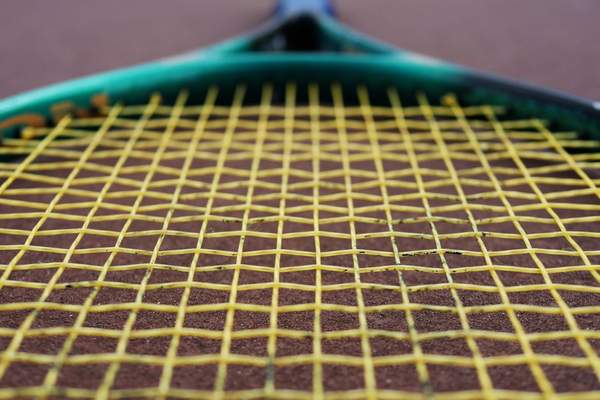
String pattern is one of those tennis racket specifications that looks simple on a product page but can noticeably change how a frame plays. A pattern such as 16×19 or 18×20 tells you how many main strings run vertically and how many cross strings run horizontally. Those numbers affect spacing across the racket string bed, influencing launch angle, spin potential, control, string movement, feel, and durability.
The comparison is often reduced to “open equals spin, dense equals control,” but that misses useful detail. Two rackets with the same nominal pattern can still play differently because head size, spacing, tension, gauge, and string material also matter.
What Makes a String Pattern Open or Dense?
An open string pattern uses wider spacing between strings, while a dense string pattern places the strings closer together. Common examples are 16×19 for an open layout and 18×20 for a dense one. The first number is the count of mains; the second is the count of crosses.
Not every 16×19 is equally open. Head size and how the strings are distributed across the face can change the effective spacing. Patterns such as 16×20 and 18×19 can sit between the usual open and dense categories.
Open String Pattern: Higher Launch and Easier Spin Access
With more space between strings, an open string pattern generally produces a livelier response and a higher launch angle. The ball tends to leave on a more elevated trajectory, which can help create depth and net clearance. For topspin hitters, the extra spacing also gives the mains more room to move and snap back when the string setup allows it.
This is why 16×19 rackets are popular with baseline players who use a fast, low-to-high swing. The pattern does not create topspin without racket-head speed and good technique, but it can make spin easier to access. Players who brush aggressively up the ball may notice a loopier trajectory and sharper dip into the court.
The Trade-Offs of a More Open Bed
A lively response can feel less predictable to flatter hitters. A higher launch angle may require an adjustment on attacking shots, while wider spacing can allow more string movement as the strings lose tension or develop notches.
Durability can also suffer for frequent string breakers. More movement can increase friction and notching, especially for heavy topspin players. String material and gauge matter greatly, but a chronic breaker may get longer life from a denser layout or a more durable setup.
Dense String Pattern: Lower Trajectory and More Controlled Response
A dense string pattern, with 18×20 as the classic example, creates a tighter racket string bed. The launch angle is usually lower, and players often describe the response as more precise or controlled. That can suit flatter hitters who drive through the ball and want confidence when aiming close to the lines.
Dense patterns also tend to limit string movement, which can produce a consistent response and may improve string life. Durability still depends on material, gauge, tension, and playing style.
Dense Does Not Mean Spin-Free
An 18×20 racket can still produce heavy spin. Technique and racket-head speed remain major factors, and some dense-pattern frames are spaced generously enough to offer useful bite. A player with a fast vertical swing may generate more spin with an 18×20 than another player using a 16×19 with a flatter stroke.
16×19 vs 18×20: What You Are Likely to Feel
When comparing similar frames, a 16×19 usually offers easier depth, a higher launch angle, more accessible spin, and a livelier feel. An 18×20 usually offers a lower trajectory, steadier directional control, reduced string movement, and potentially better durability. These are tendencies rather than guarantees.
A useful real-world test is the cross-court forehand under pressure. If you are stretched wide and need a deep ball with height and topspin, the open pattern may make that defensive shot easier. If you step inside the baseline to drive a flatter approach near the sideline, a dense bed may give you more confidence in the launch.
If possible, demo two versions of the same racket family rather than unrelated frames. Keeping head size, weight, balance, and construction similar makes it easier to isolate the effect of the string pattern. Use the same string and a similar tension in both rackets too.
String Choice Can Change the Result
String pattern never works in isolation. A slick polyester string can encourage snapback in an open bed, while a thicker gauge may improve durability. A multifilament can make a dense bed feel livelier and more comfortable than a firm polyester setup. Tension also changes launch, depth, and feel.
Changing rackets is not always necessary when the response feels slightly wrong. A player who likes a 16×19 frame but launches the ball too high might experiment with string type, gauge, or tension first. Someone who enjoys an 18×20 but wants easier depth may also be able to tune the setup. Related reading on a tennis string tension guide and tennis string types guide can help with those adjustments.
Which String Pattern Should You Choose?
Choose based on the ball you already hit and the response you want. An open pattern often suits players who use topspin, want easier depth, or prefer a more forgiving launch. A dense pattern often suits players who hit flatter, create plenty of their own pace, and prefer a lower, more predictable trajectory.
Do not choose solely from the numbers printed on the frame. Look at head size, actual spacing in the central hitting area, and the complete racket specification. Weight, balance, swingweight, stiffness, strings, and tension can all affect the result. A racket specification guide is useful when comparing models.
FAQ
Is 16×19 better than 18×20 for spin?
A 16×19 pattern generally provides easier access to spin because the strings are usually more widely spaced and can move more freely. Stroke mechanics, racket-head speed, string type, tension, and the actual spacing of a particular frame still matter.
Does an 18×20 string pattern give more control?
Usually, an 18×20 produces a lower launch angle and a more restrained response, which many players associate with directional precision. Control still depends on the racket as a whole and on the player’s technique.
Do open string patterns break strings faster?
They can. Wider spacing often allows more movement and friction, which may increase notching and breakage for heavy topspin players. Thicker gauges and more durable materials can reduce the problem.
Can beginners use an 18×20 racket?
Yes. Pattern count alone does not determine whether a racket suits a beginner. A manageable weight, comfortable string setup, forgiving head size, and easy access to depth are usually more important.
Finding the Right Balance
Tennis racket string patterns shape how the string bed returns the ball, but the best choice depends on your swing and the rest of the frame. An open 16×19 pattern usually favours easier spin, a higher launch, and livelier depth, while a dense 18×20 tends to favour a lower trajectory, consistency, and precision. Use those tendencies as a starting point, then test similar frames with comparable string setups. The pattern that lets you swing confidently and reproduce your intended ball most often is the one that fits your game.