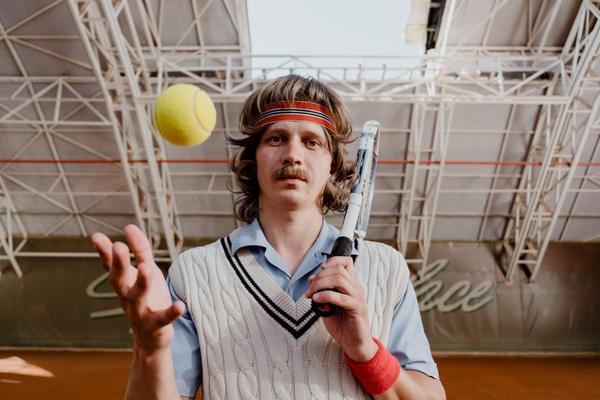
A reliable serve often starts before the racquet accelerates. If the ball leaves your tossing hand in a different place every time, the rest of the motion has to improvise. You may lean, reach, rush, or slow down just to make contact. That is why improving the tennis serve toss can make the entire service motion feel more controlled.
The goal is to place the ball in a repeatable hitting zone that lets you extend upward comfortably, stay balanced, and swing without chasing it.
Start With a Repeatable Release Point
Consistency begins with how the ball leaves your hand. USTA coaching guidance recommends releasing from the fingertips rather than pushing the ball from the palm. Keep the hand relaxed and avoid flicking the wrist at the top of the motion, because extra finger or wrist action can send the ball in a different direction from one serve to the next.
Let the tossing arm rise smoothly and release the ball at roughly the same point every time. Releasing too early can send it behind you, while releasing too late can push it too far forward. A consistent tennis toss depends more on a repeatable release than on a perfect-looking motion.
Where Should the Toss Be Placed?
Tennis toss placement should support the contact point you want. For a basic serve, the ball is generally placed above and slightly in front of the body so you can reach full extension without falling backward. USTA teaching materials describe serve contact as occurring at full extension above and slightly in front of the body.
There is no single spot that suits every player. Height, stance, mobility, rhythm, and serve type all affect the ideal location. If the toss works for you, you should be able to swing up naturally and finish balanced rather than arching excessively or lunging sideways.
Check where the ball lands
Perform your normal toss but deliberately let the ball fall. Repeat this several times from the same stance. You are looking for a small cluster of landing spots. If the ball repeatedly drops behind you, your release may be too early or your body may be leaning back. If it lands far inside the court, you may be tossing so far forward that you have to chase it.
How High Should a Tennis Serve Toss Be?
The toss needs enough height to give the racquet time to reach the tennis serve contact point, but extra height is not automatically better. A very high toss stays in the air longer, which can make timing harder and give wind more time to affect the ball. A toss that is too low can force you to rush the service motion.
A practical target is a height that lets you reach the ball near full extension with a smooth upward swing. You should not be waiting under the ball or rushing to catch it before it drops. Make small adjustments until the toss fits your natural rhythm.
Keep Your Body Stable During the Toss
Many toss problems are partly balance problems. If your upper body sways while the tossing arm rises, your release point moves with it. Keep your posture controlled through the early part of the motion, then let the rest of the serve build around that stable starting position.
For example, imagine a right-handed player whose toss constantly drifts left and behind. Instead of simply aiming farther right, check whether the torso is leaning left during release. Correcting the body position may fix the toss without consciously steering the ball.
Practise from your normal serving stance, because changing your setup can also change where the toss travels.
Serve Toss Drills for Better Consistency
Catch-and-reset drill
Go through your normal pre-serve routine, toss the ball, and catch it around the intended hitting zone without swinging. Repeat ten times. If the ball moves outside a comfortable catching area, reset instead of reaching for it. This teaches you to recognise a usable toss.
Landing-zone drill
Place a small marker where you want the ball to land when you let the toss drop. Perform ten tosses without hitting and count how many finish close to the target. This is one of the most useful serve toss drills because it gives you visible feedback and helps you measure whether your pattern is actually becoming tighter.
Fingertip-release drill
A USTA drill uses two balls in the tossing hand while releasing only the ball held at the fingertips. The exercise encourages a soft fingertip release rather than a push from the palm. Keep the arm loose and avoid squeezing the balls tightly.
Add the racquet gradually
Once the toss is more predictable, add an abbreviated service motion and hit at moderate pace. Do not jump immediately to maximum power. First prove that you can maintain the same toss while coordinating the hitting arm, then return to your full service motion.
Use the Same Routine Under Pressure
A simple pre-serve routine helps when the score matters. Use the same stance, ball-bounce pattern, breathing rhythm, and tempo so the setup contains fewer changing variables.
You also do not need to swing at a clearly bad toss. Under the Rules of Tennis, a player who tosses the ball and decides not to hit it may catch it or let it bounce without that toss itself being a fault. If the ball is badly misplaced, reset and start the motion again rather than practising a rescue swing.
Related internal topics that fit naturally here include tennis serve fundamentals, the continental grip for serving, and second-serve consistency drills.
FAQ
Where should I toss the ball for a tennis serve?
For a basic serve, aim for a position above and slightly in front of your body that allows comfortable full extension. The exact spot varies by player, so use balance and repeatability as your main guides.
Why does my tennis toss keep going behind me?
Common causes include releasing too early, flicking the wrist, or leaning backward during the toss. Practise without hitting and watch where the ball lands to identify whether the problem comes from the hand or the body.
Should the ball spin during the toss?
A little rotation is not necessarily a problem, but excessive spin can indicate unnecessary finger or wrist action. A relaxed fingertip release usually produces a cleaner and more predictable toss.
How often should I practise my serve toss?
Short, focused sessions work well. Ten to twenty deliberate tosses before serving practice can reinforce the same release point and placement without tiring the hitting arm.
Build the Serve Around a Toss You Can Trust
The best toss is not the highest or most dramatic one. It is the toss you can reproduce when you are fresh, tired, or serving under pressure. Focus on a relaxed release, stable body position, sensible height, and placement that supports full extension slightly in front of you. Once the toss becomes predictable, the rest of the serve has a much better chance to become predictable too.