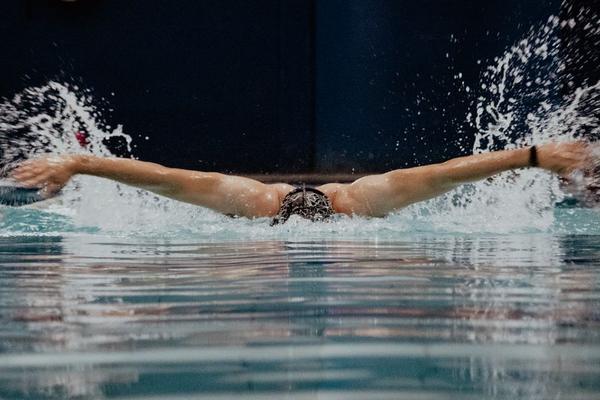
Butterfly looks powerful when both arms clear the surface together, but strong swimmers are not simply muscling through the water. Their speed comes from coordinating the kick, pull and breath while keeping the body moving forward. If your fly stroke feels exhausting after half a length, the problem may be timing rather than fitness.
Good butterfly stroke technique has a repeatable rhythm: hands enter, the body extends, the arms catch and pull, and a second kick helps finish the stroke. Learn that sequence at an easy pace before trying to hold it at race speed.
Start With a Controlled Body Wave
Float long and nearly horizontal, eyes angled toward the pool bottom. Allow the chest to press slightly as the hands extend, then let that movement travel through the hips and feet. The result should be a connected wave, not an exaggerated dive under the surface.
Keep the head relatively quiet. Forcing the shoulders upward or throwing the hips high creates resistance. Think about travelling forward through the water rather than bouncing vertically. A compact, continuous undulation is easier to repeat over an entire race.
Coordinate Two Dolphin Kicks Per Arm Cycle
A dolphin kick starts with movement through the torso and hips, followed by a controlled knee bend and quick extension of the feet. Keep the legs together and the ankles relaxed. Kicking mainly from the knees creates a bicycle-like movement and unnecessary drag.
The First Kick Supports Hand Entry
As both hands enter and extend forward, complete the first downward kick. It helps maintain momentum and reset body alignment. Avoid plunging the hands deeply while forcing the chest down; lengthen forward without stalling.
The Second Kick Supports the Pull Finish
Time the second downward kick as the hands accelerate past the torso toward the hips. This adds propulsion and helps raise the shoulders enough for arm recovery. Remember “kick in, kick out”: one kick around hand entry, another around hand exit. The two kicks may feel different in strength, but each has a distinct job.
Practise streamlined dolphin kick over short distances, focusing on a wave that travels from the chest toward the feet. A separate session of dolphin kick drills can help you develop that feeling before returning to the full stroke.
Make the Catch and Pull Move You Forward
After entry, extend the hands slightly wider than shoulder width. Angle the fingertips down and establish pressure with the palms and forearms. Avoid sweeping immediately outward or pressing straight down. You want to move water backward, not lift your chest unnecessarily high.
Keep both forearms engaged as the hands travel back beneath the body. Accelerate through the second half of the pull and finish near the hips, together with the second kick. Rushing the catch wastes useful propulsion; finishing too far behind the hips delays recovery.
Recover both arms simultaneously, wide and relatively low over the water, without stiffening the shoulders. Bring the hands forward and enter gently rather than slapping the surface. A smooth entry prepares the next catch while preserving momentum.
Time Butterfly Breathing With the Pull
Begin raising your face as the hands develop pressure on the water. Inhale quickly when the mouth clears the surface, keeping the chin close to the waterline. Return the head before the hands re-enter. Looking far forward or holding the head up too long can drop the hips.
Exhale underwater between breaths so that the brief breathing window is available for inhaling. If a breath feels rushed, try initiating it earlier in the pull rather than lifting higher. Butterfly breathing should fit the stroke instead of creating a pause.
Breathing every arm cycle can work, particularly for longer efforts. Some competitive swimmers use occasional non-breathing cycles at higher speed. Select a pattern that supplies enough air without breaking alignment. Practising swimming breathing technique during easier repeats makes the rhythm more dependable.
Put the Pieces Together in the Pool
Try this cue on a relaxed 25-metre swim: hands enter and the first kick finishes; hands extend and establish the catch; the pull accelerates with the second kick; arms recover forward while the head settles back into line. Avoid a long glide after entry or a pause with the hands beside the hips.
For a practical reset, swim four 25-metre repetitions with generous rest. First practise gentle body-dolphin movement with arms extended. Next use single-arm butterfly, switching sides halfway. Then combine three dolphin kicks with one full arm pull. Finish with easy full-stroke butterfly, concentrating on the second kick.
Ask a coach or training partner to watch from the side. The second kick should coincide with the hands finishing toward the hips, not arrive after the arms have already left the water. If form deteriorates, shorten the repetition before increasing speed. Use targeted swim technique drills to address one fault at a time.
Recognise Common Butterfly Mistakes
Hips Sink During Recovery
Check for a late second kick, high head position or downward-pushing arm pull. Keep the breath low and connect the second kick to the hands finishing near the hips.
Speed Disappears After Hand Entry
The hands may dive too deep or linger in an extended glide. Enter softly, reach forward and begin establishing the catch while momentum remains.
Shoulders Fatigue Almost Immediately
A high, forced recovery can turn every stroke into a lifting exercise. Reduce unnecessary vertical movement and let the pull and kick help the arms clear the surface.
Carry Efficient Timing Into Competition
In races, arm movements and leg movements must be simultaneous, and turns and finishes require a simultaneous, separated two-hand touch. Under World Aquatics rules, the head must break the surface by 15 metres after the start and each turn. Practise the transition from underwater dolphin kicking to your first surface stroke without disrupting body alignment.
In 100-metre and 200-metre events, establish a sustainable rhythm early. As fatigue grows, protect the second kick and low head position rather than compensating with harder arm pulls.
Frequently Asked Questions
How Many Kicks Are Used in One Butterfly Stroke?
The standard technique uses two dolphin kicks per complete arm cycle: one around hand entry and another as the pull finishes and the arms prepare to recover.
Why Are My Arms Struggling to Clear the Water?
Often the second kick is late, the hips have dropped or the pull has not finished effectively. Rehearse the timing over shorter, slower repetitions.
Should I Breathe Every Butterfly Stroke?
That depends on pace, distance and personal technique. Breathing each cycle is workable when the head stays low and returns promptly. Skipping breaths does not compensate for poor alignment.
Is Butterfly Mainly an Upper-Body Stroke?
No. Effective butterfly swimming depends on trunk movement, a coordinated dolphin kick, backward-directed arm propulsion and timely breathing. Relying primarily on shoulder strength makes the stroke harder to sustain.
Build Rhythm Before Adding Speed
Butterfly improves when each movement makes the next easier. Keep the wave modest, link two kicks to one pull, recover the arms without excessive lift and breathe with the stroke. Consistent, technically sound short repeats will serve race performance better than forcing tired, disconnected lengths.